

Fatigue Syndrome Treatment
Fatigue, Exhaustion & CFS – Holistic Treatment in Port Adelaide
Chronic fatigue and Chronic Fatigue Syndrome are not imaginary. If you are exhausted despite getting enough sleep, find it difficult to concentrate, and every activity becomes a burden – then your body needs support at the cellular level.
In my naturopathic practice in Adelaide, I combine laboratory diagnostics among other methods to uncover the root causes of your exhaustion.
Chronic Fatigue Syndrome (CFS), also known as Myalgic Enzephalomyelitis (ME), describes a state of profound, persistent exhaustion. This fatigue does not improve with sleep or rest – it persists stubbornly and impacts all aspects of daily life.
The treatment of CFS presents a unique challenge. Many of my patients have already consulted numerous doctors without receiving a clear diagnosis or effective therapy. Standard conventional medical examinations frequently remain unremarkable – even though the symptoms are very real and distressing.
In naturopathy, we view Fatigue Syndrome as a complex regulatory disorder affecting the entire organism. Therefore, the therapy for Fatigue Syndrome must take a holistic approach – addressing cellular energy, the immune system, the gut, and the nervous system simultaneously.
The Burden of Chronic Fatigue
Anyone suffering from chronic exhaustion knows the feeling: the alarm rings, and your energy is already depleted before you even get out of bed. Walking to the coffee machine feels like running a marathon. The simplest daily tasks – showering, getting dressed, making breakfast – take far more effort than they should.
At work, sufferers drag themselves through the day. Concentrating is difficult. Meetings turn into an ordeal. By the afternoon, the energy tank is completely empty. And in the evening? There is no strength left for family, friends, or hobbies.
The insidious thing about Fatigue Syndrome is that it is invisible from the outside. Colleagues, friends, and family often cannot understand why someone is "always tired". Sufferers frequently hear phrases like "pull yourself together" or "everyone gets tired sometimes". This lack of validation creates an additional emotional burden.
Typical Symptoms of Fatigue Syndrome
Fatigue Syndrome does not manifest through exhaustion alone. Sufferers frequently report a combination of different complaints that severely limit daily life:
Symptoms Checklist:
• Exhaustion: Deep fatigue that does not ease even after resting.
• Brain Fog: Difficulties with concentration, word-finding problems, forgetfulness.
• Post-Exertional Malaise: Worsening of symptoms following physical or mental exertion.
• Muscle Pain: Diffuse aches and pains with no apparent cause.
• Sleep Disturbances: Unrefreshing sleep despite sleeping for an adequate duration.
• Autonomic Complaints: Racing heart, dizziness, temperature fluctuations.
Conventional Medical Perspective on CFS
Modern medicine is increasingly recognizing CFS as a distinct medical condition. Current research points to disruptions in mitochondrial function, the immune system, and the stress axis.
Viral infections such as Epstein-Barr or COVID-19 can act as triggers. Many patients develop a post-infectious syndrome following an illness, which closely resembles classic CFS. Conventional medical treatment mostly focuses on symptom relief. Naturopathically, we take a step back to investigate the root causes and restore the body's self-regulation.
| Nutrient | Function in CFS |
|---|---|
| Vitamin B12 | Nerve function, energy metabolism, blood formation |
| Vitamin D | Immune modulation, muscle strength, mood stability |
| Iron / Ferritin | Oxygen transport, energy production |
| Magnesium | Muscle function, nervous system, ATP production |
| Coenzyme Q10 | Mitochondrial respiratory chain, antioxidant protection |
| Vitamin C | Immune system, collagen synthesis, adrenal function |
| Omega-3 Fatty Acids | Regulation of inflammation, cell membranes, brain function |
Understanding the Causes of Chronic Exhaustion
Effective Fatigue Syndrome treatment requires a deep understanding of potential underlying causes. In my clinical experience, I have learned that chronic fatigue rarely stems from a single cause; usually, multiple factors interact.
Mitochondrial Dysfunction – When Cells Lack Energy
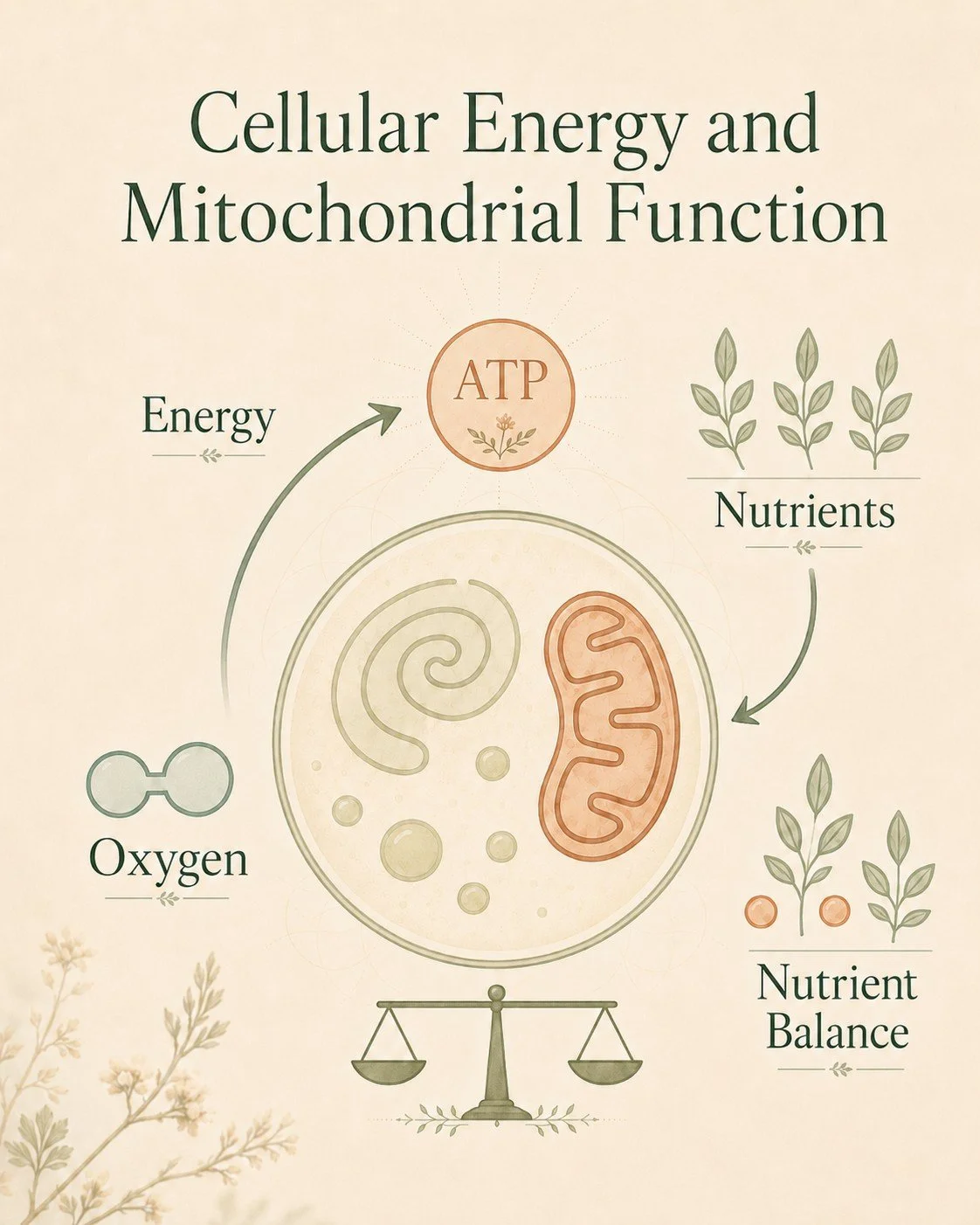
Mitochondria are the powerplants of every single cell. They produce ATP – the universal energy currency of our body. In the case of mitochondrial dysfunction, this energy production is disrupted.
Imagine driving a car with a clogged fuel filter. The engine doesn't get enough fuel, the vehicle stutters, accelerates poorly, and can barely make it up a hill. It is a similar story with damaged mitochondria: the body does not receive enough energy to drive its functions.
The consequences are clear: exhaustion, muscle weakness, and concentration issues. The body operates in an "energy-saving mode," even though plenty of food might be available. Advanced laboratory diagnostics can provide valuable clues here – measuring parameters like Coenzyme Q10, L-Carnitine, or the ATP ratio.
What damages our mitochondria? Oxidative stress, chronic inflammation, toxin exposure, nutrient deficiencies, and prolonged psychological stress all take a toll on these cellular powerplants. Certain medications can also impair mitochondrial function.
The good news is that mitochondria can regenerate. They can even form new ones – a process known as mitochondriogenesis. Targeted therapies such as IHHT can support this process, helping to replace old, damaged mitochondria with new, high-performing ones.
Clinical Insight
In many patients with chronic exhaustion, specialized lab tests show clear evidence of impaired mitochondrial function – even when standard, routine blood values appear completely normal.
Gut Microbiome and the Gut-Brain Axis
The gut is far more than just a digestive organ. It produces a large portion of our neurotransmitters, houses roughly 80% of our immune system, and communicates constantly with the brain. An altered gut microbiome can therefore have wide-ranging effects.
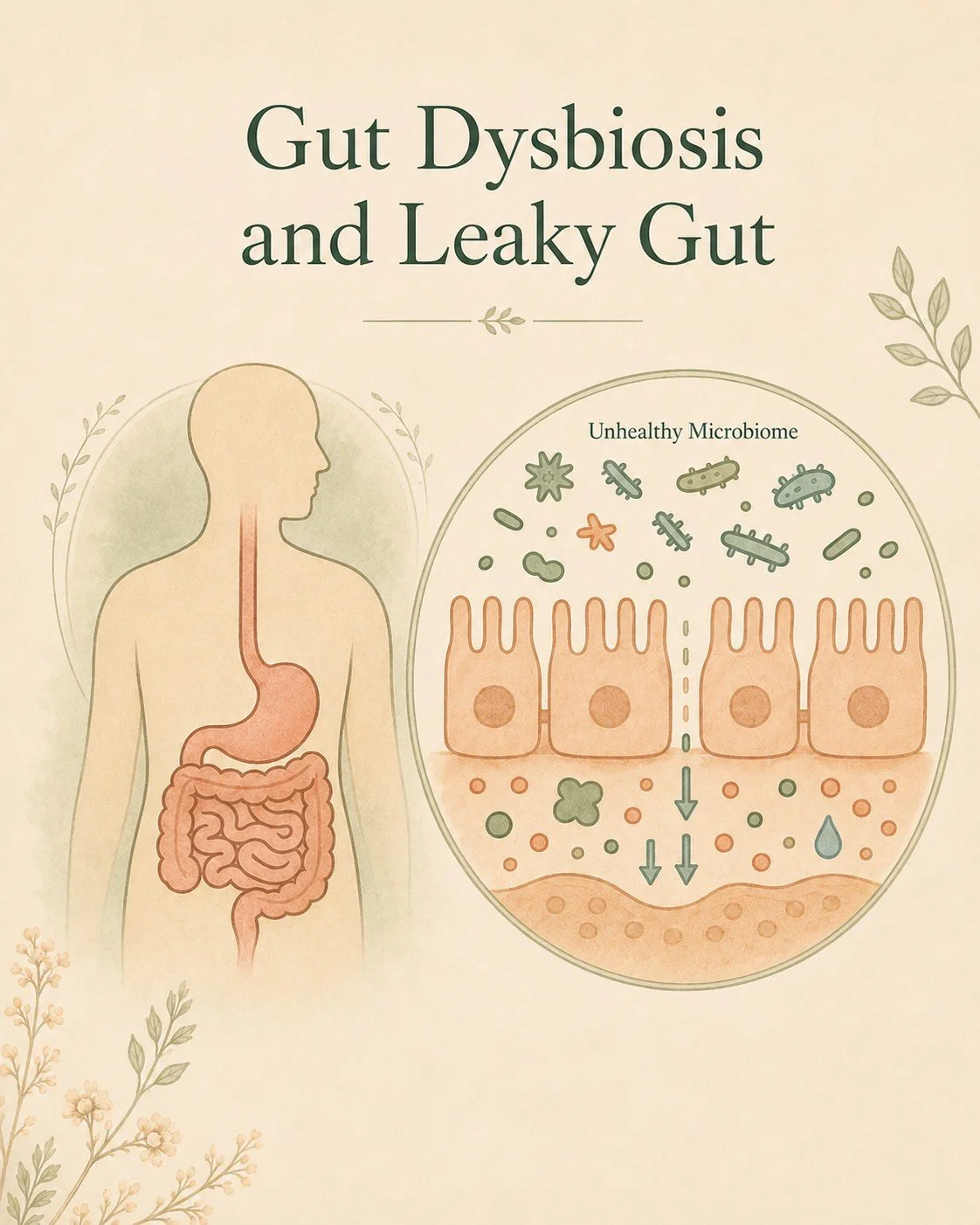
With chronic fatigue, we frequently find dysbiosis – an imbalance of gut bacteria. Certain bacterial strains can produce toxic metabolic byproducts that promote inflammation and burden energy metabolism. Furthermore, about 95% of the body's serotonin – the "happy hormone" – is produced in the gut. If the gut flora is disrupted, this production can be impaired, leading to mood swings, lack of drive, and depressive moods that further amplify fatigue.
Additionally, Leaky Gut Syndrome (increased intestinal permeability) can allow bacterial components and undigested food particles to pass into the bloodstream. The immune system responds with low-grade, silent inflammation – which is a major energy drain.
The gut-brain axis is not a one-way street: chronic stress and psychological strain also negatively affect the gut microbiome. This creates a vicious cycle of gut dysfunction, lack of energy, and stress that must be broken. In my practice, it becomes clear time and again: without a healthy gut microbiome, sustained energy is rarely possible. Gut restoration is therefore often a central pillar of Fatigue Syndrome treatment.
Nutrient Deficiencies and Oxidative Stress
Even with a seemingly healthy diet, micronutrient deficiencies can occur. Orthomolecular therapy holds particular importance in the treatment of CFS for this reason. We most frequently find deficiencies in:
Adrenal Fatigue and the Stress Axis
The adrenal glands produce cortisol – our primary stress hormone. Under chronic strain, cortisol production can become depleted, a state often referred to as adrenal fatigue.
Typical signs include fatigue in the morning, an energy crash in the afternoon, and, paradoxically, sleep difficulties in the evening. The natural cortisol rhythm is disrupted, and the internal clock is no longer running smoothly.
Heart Rate Variability (HRV) measurement can objectively demonstrate how strained your autonomic nervous system is. A low HRV indicates a state of permanent stress – even if you do not subjectively feel "stressed".
Viral Burden and Silent Infections
Chronic viral infections can smolder in the background and keep the immune system permanently occupied. The Epstein-Barr Virus (EBV) and, more recently, SARS-CoV-2 are particularly well-known for this. These viruses can reactivate after an acute infection or place the immune system in a state of constant high alert. This consumes an enormous amount of energy and explains why many individuals never truly recover after an infection.
Comparison: Normal Fatigue vs. Chronic Fatigue Syndrome
How does "normal" tiredness differ from true CFS?
Normal Fatigue: You know the cause (lack of sleep, stress, physical exertion). After resting, you feel recovered again. The tiredness is predictable and logical. You can still function, even if it feels difficult.
·Chronic Fatigue Syndrome: The exhaustion exists independently of sleep and rest. You wake up exhausted even after having plenty of sleep. Small exertions (a short walk, a meeting) can trigger a "crash" lasting for days. Cognitive limitations ("brain fog") accompany physical exhaustion.
A uniquely defining characteristic of CFS is Post-Exertional Malaise (PEM): after physical or mental exertion, the condition worsens massively, often delayed by 12–48 hours. This delayed onset makes it difficult to map initially, but it is a classic hallmark of Fatigue Syndrome.
Diagnostics: The First Step Toward Fatigue Syndrome Therapy
In my practice, a vital principle applies: First diagnosis, then the therapy. Without a clear understanding of individual root causes, any treatment is just fishing in the dark. Diagnostics for chronic exhaustion combine several targeted approaches:
Comprehensive Case History (Anamnesis): Every treatment begins with an in-depth initial consultation. When did the fatigue start? Was there a specific trigger? What does your daily routine look like? What pre-existing conditions or medications are present? This info provides key clues, as exhaustion following a viral infection requires a different approach than fatigue from years of stress or hormonal shifts.
Laboratory Testing – Beyond Standard Panels: Our lab diagnostics go far beyond standard testing. Depending on clinical suspicion, we may investigate Mitochondrial Status (Coenzyme Q10, L-Carnitine, ATP production), Micronutrients, Thyroid Values, Inflammatory Markers, Hormone Status (Diurnal cortisol profile), and Viral Serology.
Stool Testing – Looking closely at Gut Flora: A comprehensive stool analysis yields vital insights into the state of your gut microbiome. We examine the composition of the microbiome, potential dysbiosis, signs of inflammation, and the barrier function of the intestinal mucosa.
Therapy: Holistic Treatment of CFS
Based on your diagnostic results, I develop an individualized treatment plan. Fatigue Syndrome treatment in my practice utilizes various elements combined to suit your situation:
Targeted Micronutrients
Based on laboratory results, I create a customized plan to correct proven deficits and optimize cellular metabolism through vitamin minerals and dietary changes. Key building blocks often include B-Vitamins (essential for energy metabolism & methylation), Vitamin D (immune and mood regulation), Magnesium (enzymatic reactions), Coenzyme Q10 (mitochondrial chain core), and Omega-3 Fatty Acids (inflammation regulation).
Gut Restoration (Microbiome Support)
If dysbiosis is present, gut rehabilitation is carried out in three distinct phases:
1. Relief: Adjusting diet and reducing stressors to remove inflammatory foods that burden the gut.
2. Rebuilding: Administering specific probiotics, prebiotics, and mucosal-care substances tailored directly to your stool analysis findings.
3. Stabilization: Long-term nutritional optimization to maintain intestinal health.
Herbal Medicine
Herbal medicine can be very beneficial for those living with Chronic Fatigue Syndrome (CFS) by promoting better energy balance, sleep, stress resilience, and overall wellbeing. Herbs such as ashwagandha, rhodiola, chamomile, and lemon balm are traditionally used to support the nervous and immune systems while helping reduce fatigue and improve relaxation. Because CFS affects each person differently, I tailor the herbal medicine to the individual and their needs.
Stress and Nervous System Support
Chronic stress can worsen symptoms of CFS, so naturopathic treatment often focuses on calming and supporting the nervous system. Techniques such as relaxation practices, mindfulness, breathing exercises, and adaptogenic herbs may help the body cope better with physical and emotional stress.
Sleep Support
Poor sleep is a common symptom of CFS and can contribute to ongoing exhaustion. Naturopathic approaches may include herbal remedies, sleep hygiene advice, and lifestyle strategies designed to encourage deeper, more restorative sleep and improve daytime energy levels.
Lifestyle and Pacing Strategies
Managing energy carefully is an important part of living with CFS. Naturopaths often encourage pacing techniques, gentle movement where appropriate, and lifestyle adjustments that help prevent overexertion and support long-term wellbeing.
Exemplary Practice Case Description
Note: The following case description is fictitious and for illustrative purposes only. It does not constitute a promise of healing.
Mrs. M., aged 47, presented with chronic exhaustion that had persisted for two years. The condition had developed following a severe cold and never went away. Despite seeing multiple doctors and receiving 'unremarkable standard blood counts,' she felt dismissed. The fatigue severely disrupted her work life; by afternoon she had zero capacity, and she spent most of her weekends in bed.
Our extended diagnostics revealed: significantly low Vitamin D and ferritin, slightly elevated EBV antibodies (indicating a reactivated infection), gut dysbiosis, and restricted HRV showing autonomic exhaustion.
The resulting plan combined micronutrient replenishment, a multi-month gut restoration, individualized herbal medicine and some lifestyle and dietary changes. After roughly three months, Mrs. M. reported a noticeable improvement in her physical capacity, allowing her to better manage her work routine and return to an active weekend lifestyle.
Frequently Asked Questions (FAQ)
How long does treatment take? It varies. Depending on the root causes and severity, stabilization can take anywhere from several weeks to months. Regeneration must be gradual and sustainable.
Can CFS be cured? Making a promise of a cure would be unethical. However, experience shows that many patients achieve a substantial improvement in their quality of life and resilience through root-cause diagnostics and holistic therapies.
What sets this practice apart? Years of experience in naturopathy, the bridging of conventional laboratory medicine with time-tested naturopathic protocols, taking ample time for consultation, and delivering a transparent, structured concept.
If you are struggling with ongoing fatigue, brain fog, burnout-like symptoms or post-viral exhaustion, you do not have to work it out alone. Clare Condon Naturopathy offers personalised support to help explore what may be contributing to your symptoms and create a practical plan tailored to your needs.
Book your initial consultation in Port Adelaide today.
Ready to take the next step?
“I came to Clare Condon’s naturopathy clinic in Adelaide because I was struggling with fatigue and felt like I was on the edge of burnout. [...] Clare took the time to investigate properly through stool and blood testing [...] She recommended a tailored plan with different supplements and vitamins, and I’m extremely happy with the results. It has made a real difference to my energy and overall wellbeing. [...] Highly recommended!”
– Google Review, Former Customer